
By Solana Kline [honorary four-legger and lifelong dog rescue advocate]
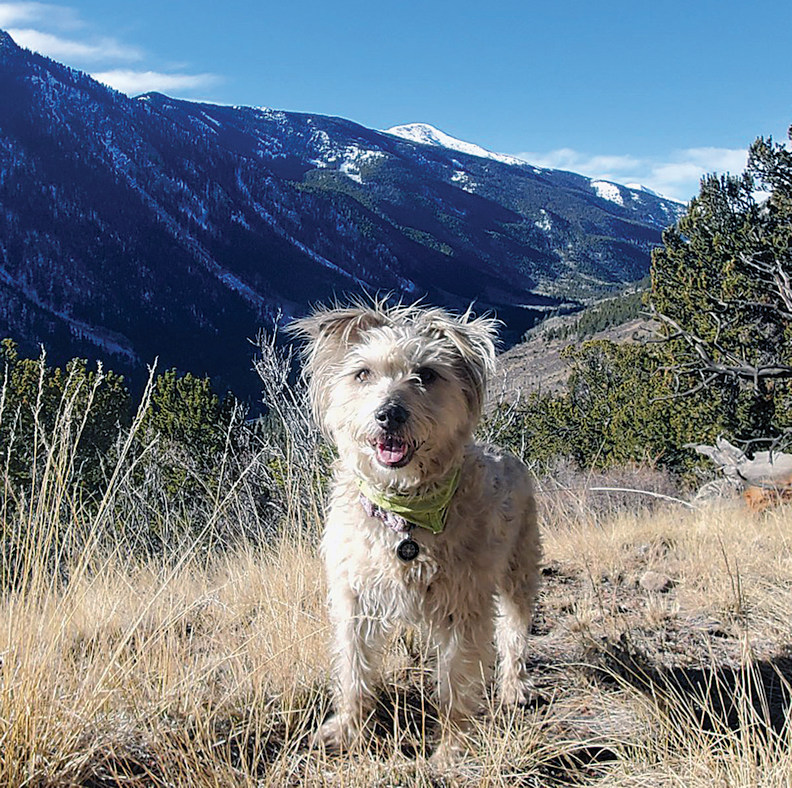
Trails hold the most immense wonder for us as humans, and for our four-leggers (canine and equine alike). For our pack, trails are our lifeblood, sanctity from a wacky world.
They present challenge and momentum, energizing our days with perspiration, respiration, peace, and beast. There’s a very noticeable shift in pack energy, interest, and enthusiasm when we get on a trail, in particular a new trail. Betty and Mickey will bolt ahead for an entire run, accelerating into turns, using the trail’s bermed sidewalls to slingshot them down the trail- especially Betty, who becomes the infamous Rocket Dog in these scenarios!
Trails are epic sites of opportunity to be wild animals amidst a civilized human world. On trails, we get to employ all of our senses and remember that we’re a part of these delicate ecosystems of Mama Nature. The pups are sniffing harder, seeing further, and we are all constructing intricate mental maps of our location and the trail as we go.
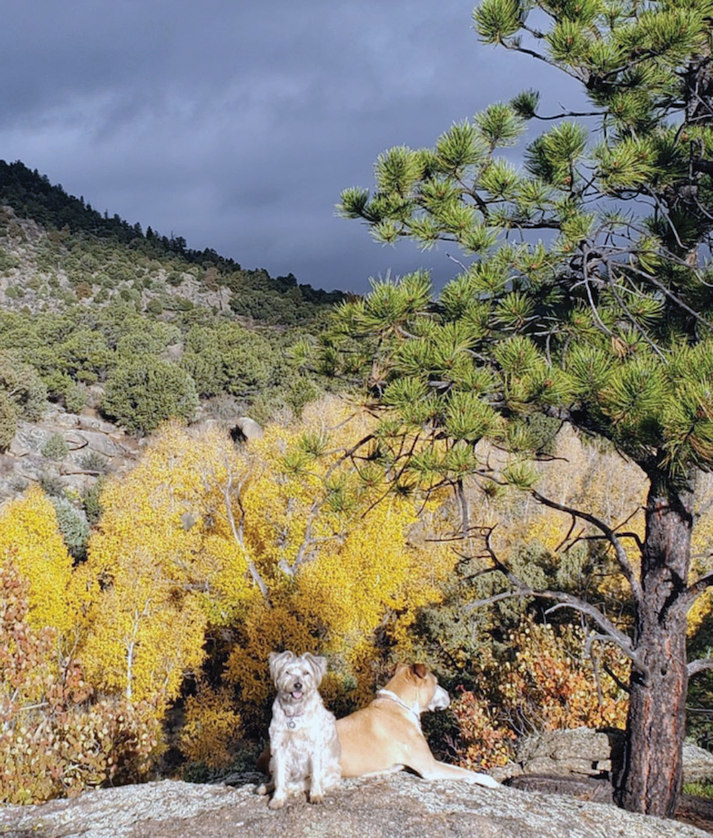
Our pack is on trails every day and the dogs ALWAYS know exactly where we are, how they can shortcut to a further section of trail, and which way the truck is—it’s astonishing!
I have been completely fascinated with this. Even when we do loops instead of out and backs, or when we make a series of trail changes to get to our destination, it never fails—they know exactly where they are, where I am, and where the truck is.
It’s a rare occurrence that I lose my bearings on a trail or out in the wilderness. But on this particular day, the pups proved that their navigational systems were far superior to my own.
“This way guys, short cut!”
Betts and Micks stood fast on the trail and looked at me like I was full of it. The sun was strong this morning—in stark contrast to the new fall frost—and giving the pups’ inquisitive perked ears a halo glow. They wouldn’t budge.
We were out on a longer-than-usual trail run this morning, and I figured Mickey’s knees and shoulders could do with a shortcut. I pressed on up the little hill to where I could see the trail again, running back down to the truck, decomposed granite soil shuffling around under my joggers. The cactus and Juniper and bunch grass radiated their happiness with yesterday’s snow and today’s sunshine.
I looked back for the dogs: nothing. They hadn’t moved an inch and showed no inclination to do so. As I got up onto the single-track, I assured them this was the right move, that it was making our lives easier. After silent deliberation, they simultaneously decided to follow me even though they firmly questioned my motives.
“Duly noted, you two, but you will be so excited ere in a minute when you see how much less work you have to do. Ha!”
Ten minutes later, however, we rounded the very same turn that we had previously been standing at when I decided to shortcut, and the hounds knew I was off my rocker. So, it was not a shortcut after all, quite the opposite, and the dogs knew it from the get-go.
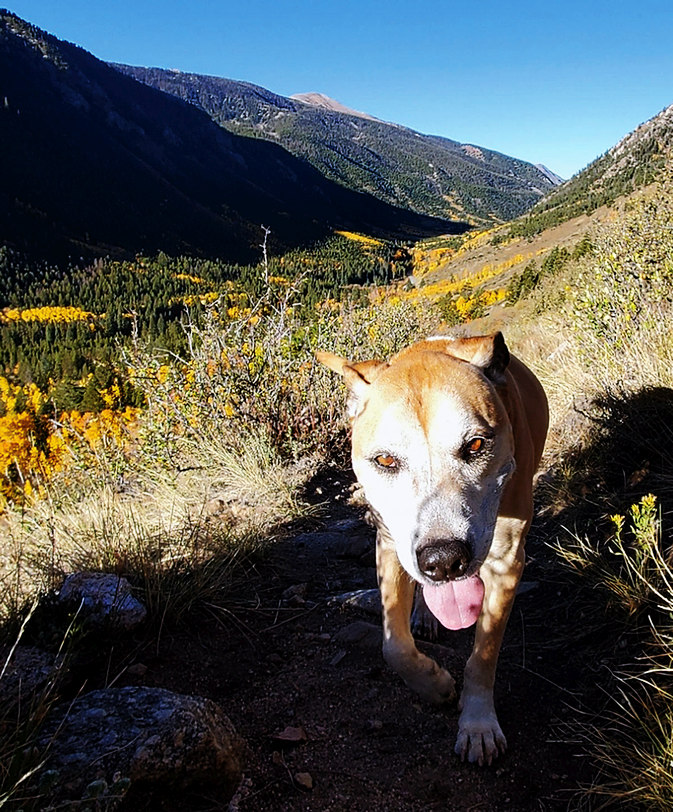
It threw me for a loop, quite literally. I stood there, disoriented, wondering how in the world I could have done that? After 25-plus years navigating backcountry and trails.
As we jogged out to the truck—the correct way this time—I couldn’t stop thinking about how the dogs knew. Their mental map of the trail was sharp and clear, even though we had only been on this trail once last Spring and going the opposite direction.
How do the pups know exactly where we are and where the trails will go? How are their trail memories and their mental maps so much more extensive and intensive than our own human ones?
The key seems to rest in specifically how dogs navigate using all of their senses, as opposed to we humans mainly relying on our sense of sight.
Dogs create mental maps of their surroundings and are incredibly accurate at homing. To navigate their space and place in the world, they use their senses of smell, hearing, and vision, along with two distinct mapping tools: path integration, and their very own internal magnetic compass, called magnetoreception!
Path integration is a form of mental mapping where pups can estimate how far and specifically where they are in relationship to their starting point. They do this by bringing together their mentally mapped distance and direction they’ve traveled since departure from their start point. This is based on their internal body movements in conjunction with their memory that help them orient in time and space. If this isn’t fascinating enough, they combine path integration with magnetic sensing.
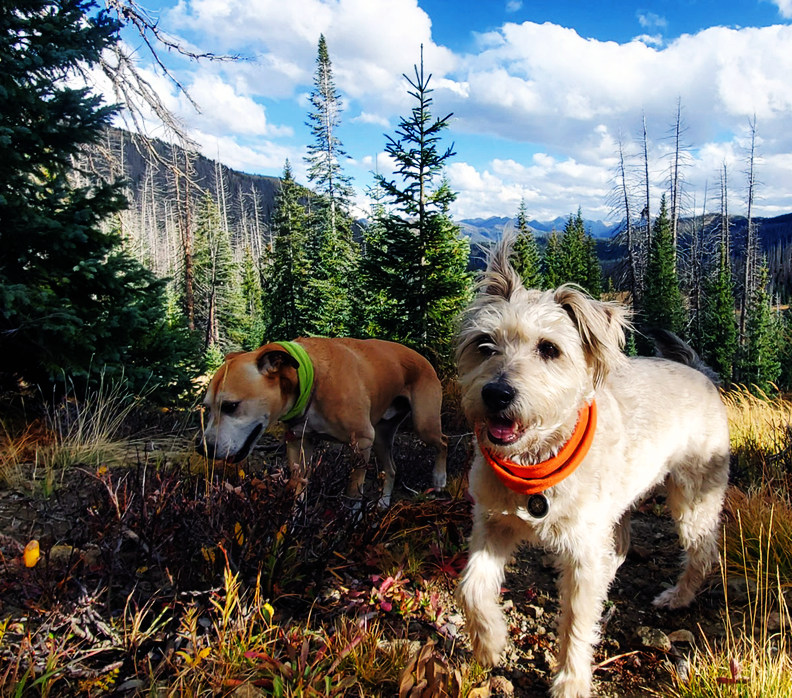
Many migratory animal species use the Earth’s magnetic fields as maps for their long journeys as seasons change. This is called magnetoreception, which is where animals are able to sense the north-south poles of the earth based on their internal mechanisms and the Earth’s energy. This navigational tool hasn’t been studied much with non-migratory species (like dogs) until the last couple of years. There is recent research into canine’s curious ability to always find their way home—sometimes across massive space and time.
Dogs seem to geolocate themselves based on the north-south magnetic poles using an additional sensory function of an internal compass—so if they’re running in the woods and are looking to find their way home or back to their start point, they’ll interrupt their current path and do a north-south jog to reorient themselves within their mental maps in relation to their original start location.
It’s thought that humans also have/had this ability. But with our current focus on sight to navigate—and now with our reliance on all the GPS technologies—we may have lost our feel or knowing for magnetoreception.
All I know is that the pups’ mapmaking and geolocating skills consistently prove much more accurate and effective than my own. And I will never cease to be amazed at their ability to shortcut trails or find our way home. As if they weren’t magical enough, now they prove to be expert cartographers to boot.
Until next time, happy tails and happy trails!
