
By Stacey Dexter
Happy 60th Anniversary to the Humane Society of Sedona, Arizona! This incredibly important milestone has a vast and dedicated history of community commitment which has put the shelter in line with the top three shelters in the United States.
Best Friends (42 years), North Shore Animal League America (82 years), and the ASPCA (160 years), are prestigious organizations to stand beside, and HSS history and the story of the people behind this success are so important. This article will highlight some of the significant milestones and stories of the loving volunteers who have made the HSS the success it is today.
The following information about the origins of HSS between 1954-2006 was generously shared with me by HSS volunteers Jeff and Deb Duffy. They have amassed an enormous amount of information—enough for a book. I was given permission to use and edit as needed for this article.
In 1954, New Yorkers Margret Mudgett and Dorthy Purnell relocated to the Village of Oak Creek and opened their shop, Peddlers Wagon. After seeing a dog thrown from a passing car and struck by another vehicle, they gently loaded the injured dog into their vehicle and took him to a local vet.
Once recovered, he was dubbed Mr. Brown. He became a fixture at the entrance to Peddlers Wagon, along with another canine adoptee, Buttons. They were the inspiration for what was to become Paw Prints, the first Humane Society of Sedona.
Mudgett and Purnell’s home and business became respites for a series of lost and abandoned dogs, but the arrangement wasn’t sustainable. Locals Ellen and Leon Verwilsts volunteered to keep cats in their home on a temporary basis, and this loving and safe temporary situation lasted for more than seven years.
Bill Harrick, board member and local builder, indicated that funding was secured to build a small shelter, but the question was… where? A large parcel of land in West Sedona called Posse Grounds was finally selected. Then named Paw Prints, it continued with its primary mission of taking care of animals who needed help including pigs, donkeys, sheep, birds, turtles, and even a pet Coatimundi.
In the early years, veterinary services were provided by whichever local vet was available. However, in 1972, a veterinarian from California opened a practice off Coffee Pot Road and began working closely with Paw Prints. Dr. William McFadden, aka the Flying Vet of Northern Arizona, routinely took his plane to remote areas to provide services. In 1973, he opened a state-of-the-art clinic on Posse Grounds Road. McFadden was invaluable in supporting the clinic with his expertise, and he will always be a part of the shelter’s history.
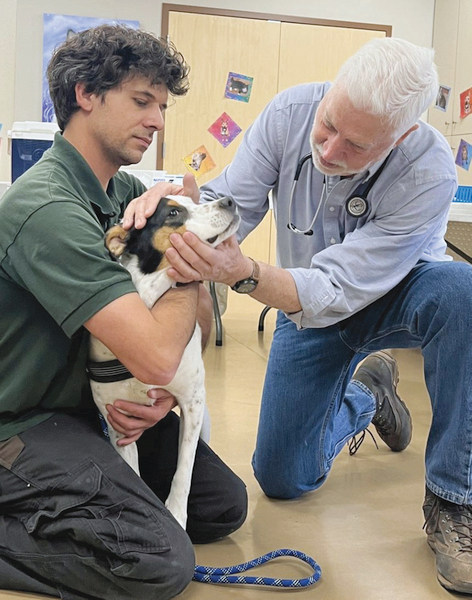
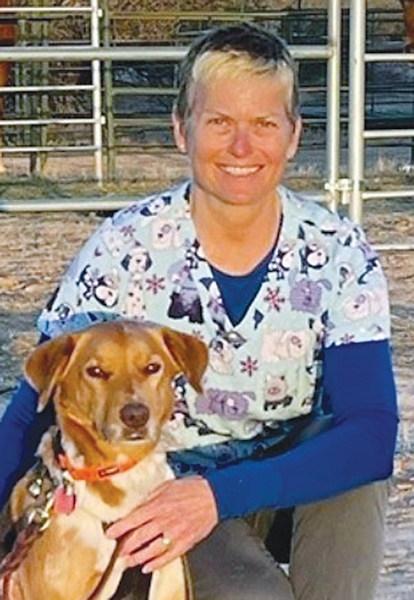
Today, Dr. Randy Barbour, veterinarian and board president, volunteers his time to run the low-cost vaccination and microchip clinics. Dr. Audrey Yank has been a staff veterinarian since 2024; she also offers her expertise as a certified veterinary acupuncturist, and her assistants include a group of talented vet techs. The animals are caring and experienced hands.
In 1972, the project ground to a halt when the state land commissioner deemed the contract at Posse Grounds invalid. Cecil Lockhart-Smith, the first president of Paw Prints, contacted politicians for their help. Arizona Senator Barry Goldwater and Representative Sam Steiger weighed in, and their intervention helped to resolve the issue and continued construction.
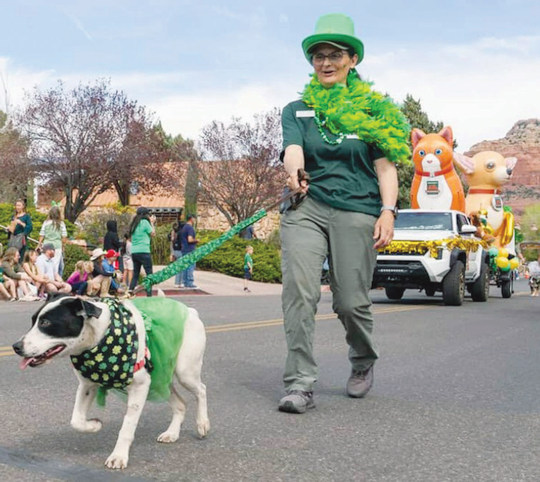
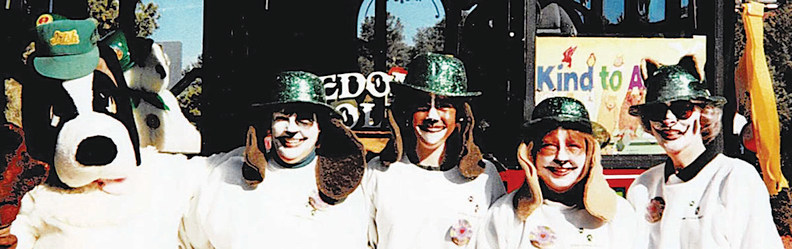
In 1974, the shelter manager, Lena Dicky, was working hard to keep the needs of the growing shelter in the public eye. With Sedona’s annual St. Patrick’s Day parade quickly approaching, she decided to enter Paw Prints into the parade with the ingenious idea of dressing her two Great Danes as warrior horses and pull her in a chariot. (If only there was a picture.) Their presence induced laughter all along the parade route and had a memorable effect—just what Dickey was hoping to achieve. Dicky was the manager of Paw Prints for 25 years.
In 1983, a parcel of land on Shelby Road was purchased for a new shelter. The new building was approximately 5,000 square feet. The adjacent lot was purchased in 1991, and it’s been an invaluable asset as a dog run. Moving into the new facility briefly satisfied the need for more space but it also brought additional demands: more room meant more animals which meant more staff, surgeries, food… and money.
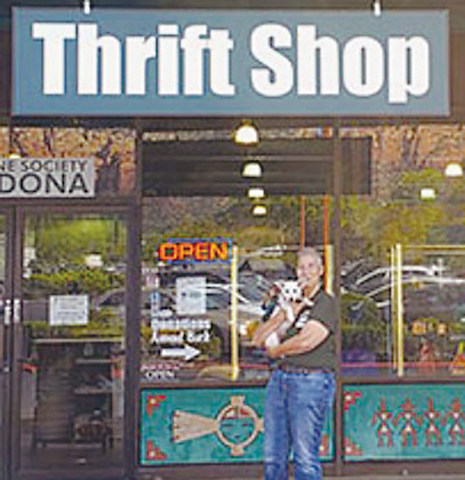
In 1994, a group of tenacious and resolute women opened the first thrift store in the Village of Oak Creek to provide revenue for HSS. The original Paw Prints Thrift Store, now managed by Reese Rose, continues to supply a significant amount of funds to sustain the needs of the shelter.
Paws West, located in West Sedona, opened its doors in 2008. It’s currently managed by Angela Henze, who oversees the enormous amounts of generous donations from estate sales held throughout Sedona.
In 1996, though the new shelter was a vast improvement, it needed to expand to meet the ever-growing population. Professional designers of humane society shelters were engaged to produce a feasibility study and propose an expansion project to create a state-of-the-art facility.
In 2006, the three-million-dollar expansion improved the space to over 14,000 square feet, which includes updated animal housing for dogs and cats, a larger dog run, and improved play areas. A commercial washer and dryer are now adjacent to the staff break room, and a quarantine area and surgical room were added to aid more animals in need.
Two Important Notes: HSS has earned the distinction of being a No-Kill Shelter. Only in terminal circumstances is euthanasia permissible. HSS is also a Fear-Free Certified Shelter. This national program started in veterinary hospitals and all staff/volunteers must be trained in their methods. The program empowers people to apply key strategies and techniques designed to reduce the negative emotional states commonly experienced by shelter animals.
Leadership
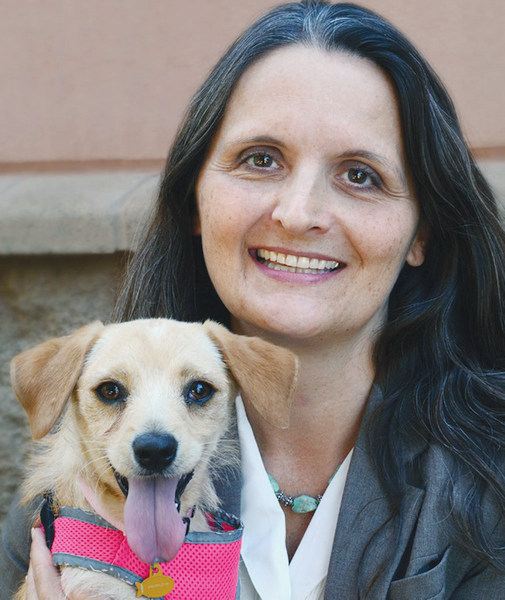
The executive director of the HSS, Jennifer Brehler, has been involved with animal sheltering for thirty years and was formerly the executive director for the San Diego Humane Society. She is also a United States Army veteran whose leadership skills and creative ideas to grow financial support for HSS has taken it in a positive and expansive direction. Her ability to interact positively with the community, encouraging donations and support, has been a plus since she came onboard in 2018.
Brehler also credits the longevity of the shelter to the generosity of its volunteers from across the Verde Valley. These volunteers are the unpaid folks who have chosen to spend their extra time aiding unfortunate animals, making the humane society a priority in their lives.
The Volunteer Coordinator
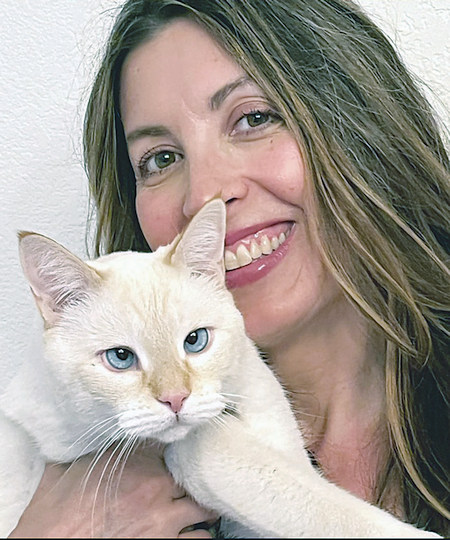
Deborah Haynes began as a volunteer, and within a few years she became a staff member. Haynes oversees almost 100 volunteers (and more are always welcome). With the shelter able to house thirty dogs and thirty cats, every available hand is always needed. HSS has a strong volunteer foster program to balance out the overflow and will work with your schedule whether you’re a student, busy parent, snowbird, or retiree.
Haynes says, “First and foremost, for any of our volunteers, I want them to find joy in volunteering. If the volunteers are fulfilled in their role of supporting us, then that transfers to the organization. Retainment happens in the first step, recruitment. I’m a bit of a matchmaker, acknowledging how someone may want to volunteer, guiding them to the areas of volunteering that might work both for them and us, and also acknowledging that if this role doesn’t feel right, then let’s find another area they can support the animals in.
Sometimes our thanks is verbal or written, sometimes it’s knowing the volunteer and how they like to help, and when the occasion arises, asking them to spearhead or contribute to the task. My goal is to make sure they know and feel how thankful we are that they have chosen to help HSS.”
Volunteers: The Lifeblood of a Non-Profit
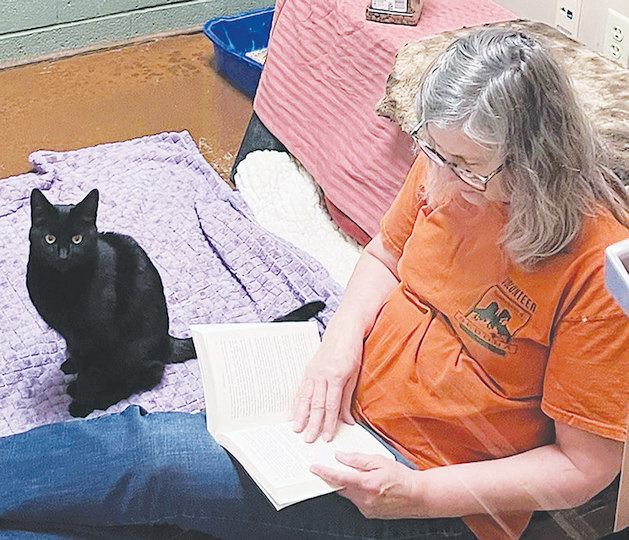
Once trained as a volunteer, you’ll be reading The Cat in the Hat to kittens and Rover the Big Red Dog to puppies. You could play the guitar and soothe them with your rendition of You’ve Got a Friend in Me, by Randy Newman.
Volunteers also bring their skills in Reiki, energy work, and massage therapy to soothe and comfort the shelter animals. All of these caring people, and those who continue to serve vulnerable and helpless animals, should be recognized for the incredible work that they have done.
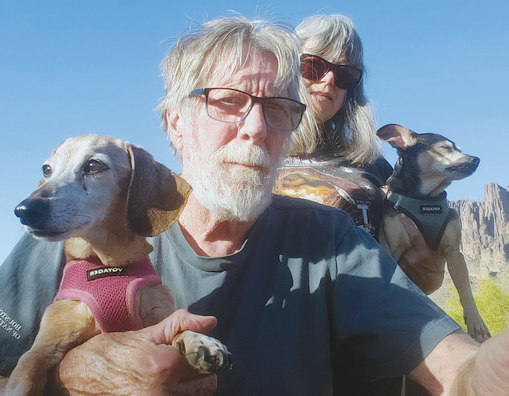
Speaking of volunteers, Sedona residents Jeff and Deb Duffy have been active with the HSS for over six years. After over thirty years of marriage and just as many years traveling across the U.S. with their fifth wheel from their home in Rockport, Texas, they settled in Sedona in 2017.
The Duffys had created their travels with a purpose and volunteered wherever they were needed. Places include: The Crane Site, Rimrock, Arizona, a fish hatchery in Kentucky, and five years at Walnut Canyon in Flagstaff, Arizona. Once permanently in Sedona, a friend raved about their experience at the shelter, and the rest is history. Loving on the kittens and cats is an experience they both cherish, while also receiving doggie love at home with their rescues Cinnamon, a seventeen-year-old shorthair dachshund, and Sugar, a ten-year-old Chihuahua mix.
In 2008, former elementary teacher Jacquie Randall spearheaded the popular program, the Kids and Kritters Camp. This became a way to raise funds and to teach children how to interact and care for animals. In the summer, there are sessions open to school-aged children seven to twelve years old.
The camp enhances kids’ appreciation of animals, and not just for dogs and cats. The program includes a wide variety of animals like snakes, pigs, horses, birds, and even fish. (More info at tinyurl.com/2n5vewhf)
Randall is also the longest running volunteer. At 35 years with HHS, she’s been involved in many aspects of the shelter. She was formerly the executive director, volunteer coordinator, and president of the board. She also wrote a weekly column, Paw Prints, for The Red Rock News. Her contributions to the HSS are invaluable.
Free tours of HSS are available, giving interested people an opportunity to experience a behind-the-scenes look and gain firsthand knowledge about the shelter.
HSS has also partnered with PetSmart in Sedona to supply food, toys, harnesses, and more. The store manager, Jake Henderson, has chosen both his career and volunteering as a way to help enrich and save the lives of animals. According to Hayes, “He’s a true animal advocate!”

A number of adoptable cats are housed comfortably in Petsmart, where felines wait for their furever homes while lounging within a comfortable bank of cat condominiums.
Haynes also shares that HSS has programs in place such as Keep Families Together which includes helpful, more affordable low-cost vaccination & microchip clinics, low cost spay & neuter, a community food bank at the shelter. It also supports local food banks and family shelters. HSS also has an emergency medical fund for those who qualify.
For their new adopters, there is Post Adoption Wellness Support (PAWS), a group of volunteers who follow up and offer support to people who have adopted a new pet. If needed, this can result in a few calls with counseling and resources to help.
Fundraising and Sustainability
In the 1950’s to 1970’s, many shelter activities were organized that are very different from today’s fundraising ventures. Community BBQ’s, concerts, Gold Bond Stamps, bake sales, aluminum-can collections, and grease-pit sales were the norm. These simpler ways worked for a long time, but the stakes are higher in the 21st century.
Expenses now include staff salaries, facility improvements, higher utility costs, and the endless need for supplies. Current needs include updated heating/cooling and new floors. HSS also wants to strengthen animals-to-people reunification.
Homemade spaghetti dinners and bake sales can no longer financially support all that needs to be accomplished. The influx of more affluent residents has seen a significant increase in philanthropy and successful fundraising endeavors. New fundraising events and creative profitable ideas include the Kids and Critters Camp, and the recent (and very successful), Critter Classic Golf Tournament.
Changes—For the Better
Appointments are now required for a meet and greet with the animals. The old routine of potential adopters randomly coming by the shelter is no longer allowed because it’s been proven that a stream of people walking through the kennels leads to excessive barking, whining, cowering, overexcitement, and a general increase of stress and anxiety among the animals.
Some people still reminisce about the good old days when the public could pop by the shelter for a look. However, this new policy is best for the animals. HSS’s website is full of pictures and descriptions about adoptable pets, making it easy to find the pet of your dreams.
Wishes for the Next Sixty Years
According to Volunteer Coordinator Deb Hayes, the wish list for the future of the HSS is as follows: “We’d like to have a permanent location for our Paws West Thrift store, expand our medical wing to accommodate more animals who come in injured or ill, modernize our cat area to create more communal housing spaces for them, and endow and name volunteer coordinator and veterinarian positions. Our biggest wish of all is that all companion animals find their furever families.”
The odds are with them, based on past successes.
Please consider volunteering, donating, or both. Don’t hesitate to call 928-282-4679 to set up your personal appointment to meet your next fur baby today.
More Information
humanesocietyofsedona.org
Social Media
Facebook: HumaneSocietyofSedona
Instagram: humanesocietyofsedona
YouTube: HumaneSocietyofSedona
